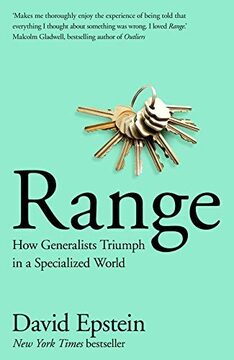
 Range
Range
Affiliate links: Sticky Idea may earn a commission, at no extra cost to you.
Epstein challenges the idea that the surest path to success is to specialize early and practice one thing relentlessly. That works in kind environments like chess or golf, where rules are fixed and feedback is quick. In the messy, changing problems of most careers, people who sample widely, switch paths and draw analogies across fields often do better.
- Kind and wicked learning environments
- A sampling period is not wasted
- Thinking outside your field
Is it worth reading?Yes, especially if you feel behind for not having a single passion or a straight career path. It is well researched and reassuring; some chapters stack many stories to make the same point.
The 3 big ideas from Range
Kind and wicked learning environments
Early specialization pays off where patterns repeat and feedback is fast. Where rules shift and feedback is slow or misleading, broad experience and flexible thinking matter more.
A sampling period is not wasted
Trying different activities and jobs helps people find a good fit. Those who switch later often progress faster because they chose with better information.
Thinking outside your field
Many breakthroughs come from applying an idea from one domain to another. Analogies and outside views help solve problems that experts inside the field are stuck on.
Read the ideas free
See the ideas in real life
Put Range to work
FAQ
What is the main idea of Range?
That in a complex, unpredictable world, breadth of experience, late specialization and cross-field thinking are often advantages, not detours.
Is Range worth reading?
Yes, especially if you feel behind for not having a single passion or a straight career path. It is well researched and reassuring; some chapters stack many stories to make the same point.
Who should read Range?
Career changers, generalists, parents deciding how hard to push one activity, and managers building teams that solve new problems.
More like Range

Did you find what you were looking for?
Thank you. We read every answer, and pages get fixed from what readers tell us.