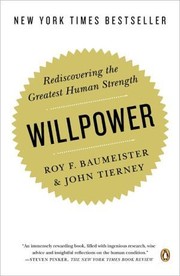
 Willpower
Affiliate links: Sticky Idea may earn a commission, at no extra cost to you.
Psychologist Roy Baumeister and science writer John Tierney bring together research on self-control and argue that willpower works much like a muscle: it can be tired out by use and strengthened over time. Many decisions and temptations in a row can leave people with less self-control, which helps explain why resolutions fail late in the day. The authors' practical answer is not heroic effort but smart design: set clear goals, track progress, build habits, and arrange your life so you need willpower less often.
- Self-control can run low
- Decision fatigue is real
- Track and plan
- Use willpower to build habits
Is it worth reading?Yes for its practical advice on goals, tracking, and habits, which holds up even where the science behind depletion is uncertain.
The 4 big ideas from Willpower
Self-control can run low
Resisting temptation and making many choices draws on the same capacity, so a demanding day can leave you with less self-control in the evening.
Decision fatigue is real
Making decision after decision wears down judgment, which is why people tend to pick the default or act on impulse late in a long day.
Track and plan
Monitoring behaviour, whether spending, eating, or work, is one of the most reliable ways to improve it, and specific plans beat vague intentions.
Use willpower to build habits
The most self-controlled people do not resist more often. They spend willpower setting up routines and environments that avoid temptation.
Read the ideas free
See the ideas in real life
Put Willpower to work
FAQ
What is the main idea of Willpower?
That self-control is a limited but trainable resource, and that the best strategy is to set up habits and routines so you need to rely on it less.
Is the willpower-as-a-muscle idea still accepted?
It is debated. Some later studies failed to reproduce the depletion effect, so read the book as a useful model rather than settled science.
Is Willpower worth reading?
Yes for its practical advice on goals, tracking, and habits, which holds up even where the science behind depletion is uncertain.