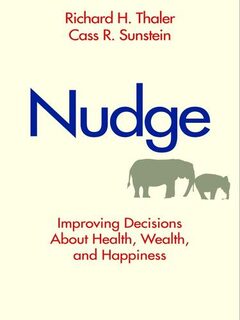
 Nudge
Nudge
Affiliate links: Sticky Idea may earn a commission, at no extra cost to you.
Thaler and Sunstein show that the way choices are presented, from the order of food in a cafeteria to the default option on a pension form, strongly shapes what people pick. Since some design is unavoidable, they argue for choice architecture that gently steers people toward better outcomes while leaving them free to choose otherwise, an approach they call libertarian paternalism.
- There is no neutral design
- Defaults are powerful
- Nudge, don't mandate
Is it worth reading?Yes, it is the founding book of a whole policy field and still the clearest introduction to choice architecture. Some policy chapters feel dated, so the opening part on how people decide is the most valuable.
The 3 big ideas from Nudge
There is no neutral design
Every form, menu and website arranges options somehow, and that arrangement influences decisions. The question is not whether to influence choices but how to do it well.
Defaults are powerful
Most people stick with whatever happens if they do nothing. Making saving for retirement or organ donation the default changes participation rates far more than persuasion does.
Nudge, don't mandate
A good nudge makes the better choice easier without forbidding the alternatives or changing incentives much. Clear feedback, sensible defaults and simple options help people who are busy, distracted or overloaded.
Read the ideas free
See the ideas in real life
FAQ
What is the main idea of Nudge?
That choice architecture, the way options are framed and arranged, predictably changes behavior, and that it can be designed to help people make better decisions while keeping their freedom to choose.
Is Nudge worth reading?
Yes, it is the founding book of a whole policy field and still the clearest introduction to choice architecture. Some policy chapters feel dated, so the opening part on how people decide is the most valuable.
Who should read Nudge?
Designers, product managers, policymakers, marketers and anyone curious why small changes in presentation move big numbers.
More like Nudge
 Misbehaving
 Predictably Irrational
 Thinking, Fast and Slow
 The Paradox of Choice
Did you find what you were looking for?
Thank you. We read every answer, and pages get fixed from what readers tell us.