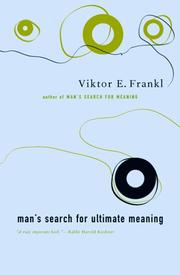
 Man’s Search for Meaning
Man’s Search for Meaning
Frankl, a psychiatrist who survived Nazi concentration camps, recounts how prisoners who found meaning were better able to endure unimaginable suffering. From this he develops logotherapy, the idea that the primary human drive is not pleasure or power but the search for meaning. Even when everything is taken, he argues, one freedom remains: to choose one's attitude. Meaning can be found in work, in love, and in how we face unavoidable suffering.
- Meaning is the deepest human drive
- The last freedom is your attitude
- Suffering can hold meaning
The 3 big ideas from Man’s Search for Meaning
Meaning is the deepest human drive
Frankl argues our central motivation is not pleasure or power but the search for meaning. Those who had a 'why' to live for could bear almost any 'how'.
The last freedom is your attitude
Even stripped of everything in the camps, prisoners retained the freedom to choose how they responded. This inner choice is something no circumstance can take.
Suffering can hold meaning
When suffering is unavoidable, Frankl argues, we can still find meaning in how we bear it. Meaning is also found in purposeful work and in love for others.
Read the ideas free
FAQ
What is the main message of Man's Search for Meaning?
That life has meaning even in suffering, and that the search for meaning — not pleasure or power — is our primary drive. We always retain the freedom to choose our response to circumstances.
Is Man's Search for Meaning worth reading?
Yes — it's a short, profound, widely loved book that pairs a firsthand Holocaust memoir with a hopeful psychological philosophy. Many readers find it genuinely life-changing.
What is logotherapy?
Frankl's school of psychotherapy built on the idea that the search for meaning is the central human motivation. It helps people find purpose even amid suffering and loss.