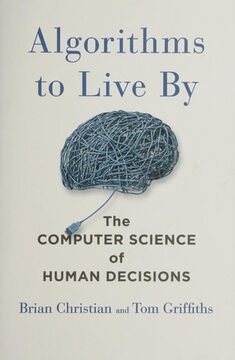
 Algorithms to Live By
Affiliate links: Sticky Idea may earn a commission, at no extra cost to you.
A computer scientist and a cognitive scientist show how solutions developed for computers apply to everyday decisions. Optimal stopping tells you when to stop searching for an apartment, the explore and exploit trade-off when to try a new restaurant, caching how to organize your stuff, and scheduling theory how to order your to-do list. Many human problems are hard for machines too.
- Know when to stop looking
- Balance exploring and exploiting
- Good enough is often optimal
Is it worth reading?Yes, it is one of the most original books on decision making, with no math required. A few chapters get technical, but the everyday examples keep it readable.
The 3 big ideas from Algorithms to Live By
Know when to stop looking
For searches where you can't go back, like hiring or house hunting, spend roughly the first third looking without committing, then take the first option better than everything you have seen.
Balance exploring and exploiting
Trying new things pays off when you have plenty of time left to enjoy what you discover. As time runs short, it makes sense to stick with known favorites.
Good enough is often optimal
Many problems are too complex to solve perfectly. Simple rules, a bit of randomness and accepting an approximate answer are often the smartest choice, for people and computers alike.
FAQ
What is the main idea of Algorithms to Live By?
That computer science has studied many of the same trade-offs people face daily, and its solutions offer practical, often surprising guidance for deciding better.
Is Algorithms to Live By worth reading?
Yes, it is one of the most original books on decision making, with no math required. A few chapters get technical, but the everyday examples keep it readable.
Who should read Algorithms to Live By?
Curious readers who like ideas from science, people who overthink everyday choices, and anyone in tech who wants to see their field applied to life.
More like Algorithms to Live By
 Thinking in Bets
 The Great Mental Models
 The Paradox of Choice
 Superforecasting
Did you find what you were looking for?
Thank you. We read every answer, and pages get fixed from what readers tell us.