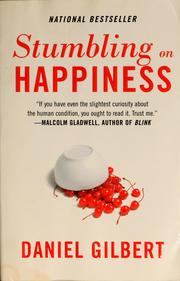
 Stumbling on Happiness
Affiliate links: Sticky Idea may earn a commission, at no extra cost to you.
Harvard psychologist Daniel Gilbert explains why people are surprisingly bad at predicting what will make them happy. When we imagine the future, our minds fill in missing details, leave out others, and assume the future will feel much like today. As a result we overestimate how long good and bad events will affect us, and we underestimate how quickly we adapt. Gilbert's playful, research-packed tour ends with a practical suggestion: to predict how something will feel, ask someone who is experiencing it now.
- Imagination fills in the gaps
- We expect today's feelings to last
- We adapt faster than we expect
- Ask someone who is there
Is it worth reading?Yes if you enjoy psychology written for general readers. It is entertaining, and its main point changes how you think about big decisions.
The 4 big ideas from Stumbling on Happiness
Imagination fills in the gaps
When we picture the future, the brain quietly invents details and drops others, so the picture feels complete even when it is badly wrong.
We expect today's feelings to last
Our current mood colours how we imagine the future, so we predict that tomorrow will feel more like today than it will.
We adapt faster than we expect
A psychological immune system helps us make sense of setbacks, so bad events hurt for less time than we predict and good events fade sooner.
Ask someone who is there
Other people's present experience is often a better guide to how something will feel than our own imagination, even though we resist the idea.
Read the ideas free
See the ideas in real life
FAQ
What is the main idea of Stumbling on Happiness?
That our imagination is unreliable when predicting future happiness, so we often choose things that will not make us as happy as we expect.
Is Stumbling on Happiness a self-help book?
Not really. It explains research on prediction and happiness with humour, and leaves most of the practical conclusions to the reader.
Is Stumbling on Happiness worth reading?
Yes if you enjoy psychology written for general readers. It is entertaining, and its main point changes how you think about big decisions.