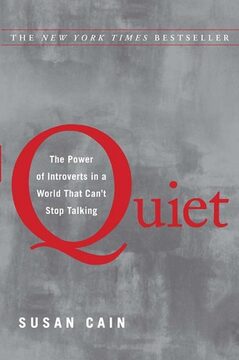
 Quiet
Quiet
Affiliate links: Sticky Idea may earn a commission, at no extra cost to you.
Cain argues that modern culture, especially at school and work, favors the outgoing, talkative extrovert ideal and undervalues introverts, who make up a large share of the population. Drawing on psychology and neuroscience, she explains how introverts process stimulation and think, and shows how their strengths, such as careful thought, listening and focus, can be valued instead of fixed.
- Introversion is about stimulation
- Groupthink is overrated
- Stretch, then restore
Is it worth reading?Yes, it has helped many readers understand themselves or someone close to them. It is well researched and humane; extroverts may find the middle chapters less relevant.
The 3 big ideas from Quiet
Introversion is about stimulation
Introverts tend to feel at their best with less stimulation and recharge alone, while extroverts seek more. It is a difference in temperament, not shyness or a flaw.
Groupthink is overrated
Open offices and constant brainstorming can drown out quieter people and good ideas. Some of the best thinking happens in solitude, followed by sharing.
Stretch, then restore
Introverts can act extroverted for work they care about, such as giving a talk, but they need restorative niches afterward. Planning those breaks makes the stretch sustainable.
FAQ
What is the main idea of Quiet?
That introverts are undervalued in a culture that prizes extroversion, and that schools, workplaces and introverts themselves benefit from recognizing and using their strengths.
Is Quiet worth reading?
Yes, it has helped many readers understand themselves or someone close to them. It is well researched and humane; extroverts may find the middle chapters less relevant.
Who should read Quiet?
Introverts, parents and teachers of quiet children, and managers who want to get the best from people who don't speak up first.
More like Quiet
 Daring Greatly
 The Courage to Be Disliked
 Deep Work
 Mindset
Did you find what you were looking for?
Thank you. We read every answer, and pages get fixed from what readers tell us.