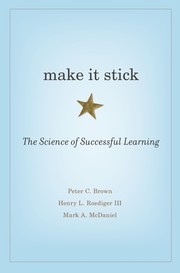
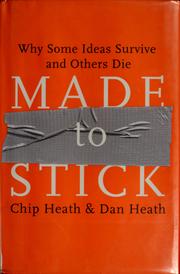
 Made to Stick
Affiliate links: Sticky Idea may earn a commission, at no extra cost to you.
The Heath brothers ask why some ideas survive and spread while most are forgotten the moment they are heard. Their answer is six shared traits, summed up as SUCCESs: Simple, Unexpected, Concrete, Credible, Emotional, and Stories. The biggest obstacle, they argue, is the curse of knowledge: once you know something, you can no longer imagine not knowing it, so you explain it in abstractions your audience cannot hold. The book is a practical toolkit for teachers, managers, and anyone who needs a message to be understood and remembered.
- Find the core and say it simply
- Break a pattern to get attention
- Concrete beats abstract
- Beat the curse of knowledge
Is it worth reading?Yes if you teach, present, write, or lead. It is short on theory and long on examples, so it is easy to apply the next time you have to explain something.
The 4 big ideas from Made to Stick
Find the core and say it simply
A sticky message strips an idea down to its single most important point, then expresses it in a compact form people can repeat. Saying three things means saying nothing.
Break a pattern to get attention
Surprise grabs attention and curiosity holds it. Opening a gap in what people know, then filling it, keeps them listening longer than a list of facts.
Concrete beats abstract
People remember sensory, specific images far better than general statements. Concrete examples also make sure everyone in the room pictures the same thing.
Beat the curse of knowledge
Experts forget what it was like not to know. Testing your message on someone outside your field, and replacing jargon with stories and examples, is the remedy.
Read the ideas free
See the ideas in real life
Put Made to Stick to work
FAQ
What is the main idea of Made to Stick?
That memorable ideas share six traits (simple, unexpected, concrete, credible, emotional, stories), and that the curse of knowledge is what usually stops experts from using them.
Is Made to Stick worth reading?
Yes if you teach, present, write, or lead. It is short on theory and long on examples, so it is easy to apply the next time you have to explain something.
What is the curse of knowledge?
Once you know something, it becomes hard to imagine not knowing it, so you skip steps and use abstractions your audience cannot follow.