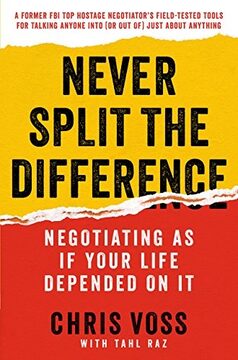
 Never Split the Difference
Affiliate links: Sticky Idea may earn a commission, at no extra cost to you.
Former FBI hostage negotiator Chris Voss argues that negotiation is less about logic than emotion, and that the tools that free hostages also work for salaries, rent and family disputes. His approach relies on tactical empathy: listening closely, mirroring and labeling the other side's feelings, asking calibrated open questions and getting them to feel understood before you ask for anything.
- Make the other side feel understood
- Ask how and what questions
- Don't meet halfway by default
Is it worth reading?Yes, it is one of the most practical negotiation books, with techniques you can use in your next conversation. The hostage stories are dramatic; the methods themselves are simple and well explained.
The 3 big ideas from Never Split the Difference
Make the other side feel understood
People agree more readily when they feel heard. Naming their emotions out loud, such as saying it seems like they are worried about timing, defuses tension and invites them to explain.
Ask how and what questions
Open questions like how am I supposed to do that make the other side solve your problem. They give them a sense of control while steering the conversation.
Don't meet halfway by default
Splitting the difference often leaves both sides unhappy and the problem unsolved. Patient listening usually reveals information that makes a better deal possible.
FAQ
What is the main idea of Never Split the Difference?
That successful negotiation comes from tactical empathy, understanding and acknowledging the other person's emotions, rather than from pure logic or compromise.
Is Never Split the Difference worth reading?
Yes, it is one of the most practical negotiation books, with techniques you can use in your next conversation. The hostage stories are dramatic; the methods themselves are simple and well explained.
Who should read Never Split the Difference?
Anyone who negotiates salary, deals, rent or family decisions, plus salespeople, managers and freelancers who find hard conversations uncomfortable.
More like Never Split the Difference
 Influence
 How to Win Friends and Influence People
 Thinking in Bets
 Start With Why
Did you find what you were looking for?
Thank you. We read every answer, and pages get fixed from what readers tell us.